Dropshipping is one of the most accessible business models in 2026. You sell products online, but never touch inventory — when a customer places an order, your supplier ships the product directly to them. Your role is to create the brand, market the products, and manage the customer relationship. The result? You can run a $5,000–$50,000/month e-commerce business from a laptop, from anywhere in the world.
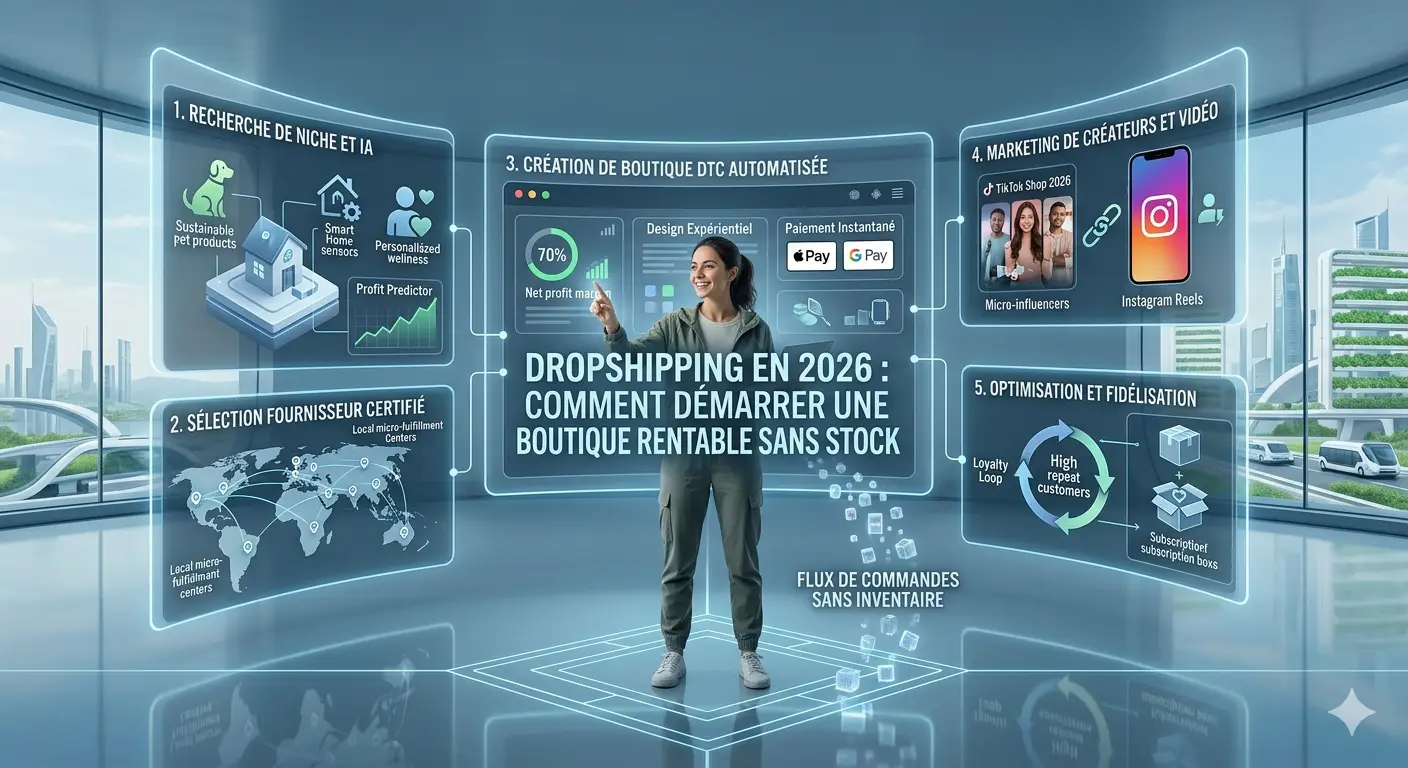
But let's be honest about something that most "dropshipping gurus" won't tell you: the vast majority of dropshipping stores fail within 6 months. The reason isn't that the model is broken — it's that people start without a real strategy, pick products with no demand or terrible margins, and rely on tired tactics that worked in 2019 but don't anymore. This guide gives you the updated 2026 playbook for building a dropshipping business that actually lasts.
Is Dropshipping Still Worth It in 2026?
Yes — but the competitive landscape has changed significantly. The era of finding a random AliExpress product, running Facebook Ads, and printing money is largely over. What works in 2026 is:
- Niche + brand focus rather than general "winning product" stores
- Better quality suppliers with faster domestic shipping (US/EU based)
- Genuine brand building — logo, packaging, brand story, social presence
- Diversified traffic — organic SEO + social media + email, not just paid ads
- High Average Order Value (AOV) products ($50–$200 price point) with healthy margins
The dropshipping businesses thriving in 2026 look and feel like real brands — because they are. The era of arbitrage is over. The era of brand-first dropshipping is very much alive.
Step 1: Finding Your Winning Niche
A niche is more than a product category — it's a passionate community of buyers with specific needs and purchasing habits. The best dropshipping niches in 2026 share three characteristics:
- Passionate buyers: People who self-identify with the niche (dog owners, rock climbers, home baristas) spend more and buy more frequently than casual shoppers.
- Recurring needs: Consumables, accessories, and seasonal products create repeat purchase opportunities.
- AOV potential: Products in the $40–$150 sweet spot allow healthy margins after ad spend and COGS.
5 High-Potential Dropshipping Niches for 2026
Pet Care & Accessories
30–50% marginPet owners spend $140B+ annually and consistently prioritize their animals' wellbeing. Products: orthopedic pet beds, GPS trackers, personalized accessories, premium grooming tools. Passion-driven buyers with high AOV potential and strong repeat purchase rates.
Home Office & Remote Work
25–45% marginThe permanent shift to remote work created sustained demand for home office ergonomics, aesthetics, and productivity tools. Desk accessories, standing desk converters, cable management, ambient lighting, and ergonomic accessories are in consistent demand with engaged buyer communities on Pinterest and Reddit.
Wellness & Mental Health
35–60% marginThe wellness industry hit $4.5 trillion globally in 2024. Products: meditation accessories, sleep aids (weighted blankets, white noise machines), journal bundles, stress relief gadgets. Strong brand opportunity with differentiated packaging and content marketing.
Eco-Friendly Products
30–55% marginSustainability-conscious consumers actively seek alternatives to single-use plastics and non-sustainable products. Reusable bags, bamboo alternatives, eco kitchen products, and zero-waste personal care items. Premium pricing justified by environmental credentials — excellent for brand building.
Smart Home & Tech Accessories
20–40% marginSmart home device ownership continues to grow rapidly. Accessories, organizers, and complementary products for existing smart home ecosystems (Ring cameras, smart speakers, robot vacuums) have built-in search demand from the installed base of existing device owners.
Step 2: Product Selection — The Framework That Separates Winners from Losers
Not every product in a hot niche will succeed. Before committing to any product, validate it using this framework:
| Validation Criteria | What to Look For | Red Flag |
|---|---|---|
| Sell Price | $40–$150 sweet spot | Under $20 (can't afford ads) or over $300 (trust barrier) |
| Gross Margin | 30%+ after COGS | Under 20% — no room for ads + profit |
| Search Volume | 1,000–50,000 monthly searches | Zero searches = no demand; millions = too competitive |
| Competition Level | Competitors exist but aren't dominating | Amazon/Walmart own the category entirely |
| Shipping Suitability | Small, lightweight, unbreakable | Fragile, oversized, heavy, liquid, dangerous |
| Repeat Purchase | Consumable or has accessories | One-time purchase with no follow-on opportunity |
Step 3: Choosing the Right Suppliers
Your supplier is your silent business partner — they determine your product quality, shipping speed, and ultimately your customer satisfaction. In 2026, these are the top supplier options:
- AutoDS — Automation-focused platform with access to US, EU, and Chinese suppliers. Best for scale.
- Zendrop — US-based warehouse with 5–8 day delivery. Dramatically reduces refund rates from slow shipping.
- Spocket — Curates US and European suppliers for faster delivery and better product quality than AliExpress.
- Alibaba (Private Label) — For brands ready to move from dropshipping to branded inventory for higher margins.
- CJDropshipping — Cost-competitive Chinese supplier with decent shipping times (8–15 days) and white-label options.
Non-negotiable supplier requirements: ePacket or faster shipping option, response time under 24 hours, sample order policy, and dispute resolution process. Never launch a product without ordering a sample yourself first.
Step 4: Building Your Store (30-Day Launch Plan)
Week 1: Foundation
Register Shopify ($1/month trial). Choose a clean, conversion-focused theme (Debutify or Dawn). Set up your store name, logo (Canva is free), colors, and brand voice. Install essential apps: DSers or AutoDS for product importing, Loox for reviews, and a basic email capture popup.
Week 2: Product & Content
Import your initial 10–15 products. Write compelling product descriptions focused on benefits, not features. Add a FAQ section. Create your About Us page — brand story matters enormously for conversion. Set up your Abandoned Cart email sequence (Shopify Email is free to start).
Week 3: Traffic Foundation
Create your Instagram and TikTok profiles. Post 3× per day on TikTok (organic TikTok is the fastest free traffic source in e-commerce in 2026). Set up Google Shopping free listings. Submit your XML sitemap to Google Search Console for SEO indexing.
Week 4: Paid Traffic Test
Run a $15/day Facebook or TikTok ad test for your top 3 products. Use simple video ads showing the product in use. Track Add to Cart and Purchase events. Kill any product that doesn't generate an Add to Cart in the first $30 of spend. Scale what converts above 1.5× ROAS.
The Realistic Profit Model for a $5,000/Month Store
📊 Monthly P&L Example: $5,000 Revenue Store
At $10,000/month, ad costs become a smaller percentage (as organic and email traffic grow), pushing net profit margins toward 35–45%. This is why scaling matters — dropshipping margins improve significantly as you grow because your fixed costs spread across more revenue.
Common Dropshipping Mistakes to Avoid in 2026
- Using only Chinese suppliers with 20+ day shipping: In the Amazon Prime era, 3–7 day delivery is the baseline customer expectation. Long shipping times are the #1 cause of refund requests and chargebacks.
- Selling trademarked products: Never dropship products with brand logos (Nike, Apple, etc.). This is copyright infringement and payment processors will shut down your account.
- Ignoring customer service: Fast, friendly customer service is a competitive advantage in dropshipping. Most competitors are terrible at it. Be the exception.
- Running ads before testing organic: Before spending money on ads, validate demand with free TikTok content. If organic posts don't generate engagement on a product, paid ads rarely save it.
- Giving up after 60 days: Most successful dropshipping stores take 3–6 months to find their first consistently profitable product. Persistence is the differentiator.
Conclusion: Dropshipping in 2026 Rewards Builders, Not Arbitrageurs
Dropshipping in 2026 is not a get-rich-quick scheme. It's a legitimate business model that rewards people who approach it like real entrepreneurs: with a brand strategy, quality products, genuine customer service, and patience for the compounding effects of good work. The people making $20,000+ per month dropshipping aren't lucky — they're systematic.
Start with one niche, one target customer, and 5–10 validated products. Build a brand around them. Create organic content consistently on TikTok or Instagram. Test ads on your best organic performers. Optimize and reinvest your profits. Use our ROI Calculator to track your ad spend efficiency and overall business profitability as you scale.
For more on building your online business, explore our guides on e-commerce SEO to drive free organic traffic, email marketing to maximize customer lifetime value, and pricing strategy to protect your margins as you grow.
🔗 Related Resources

Written and reviewed by
Rachel Torres
Rachel Torres is the BusinessFocusHub editorial author for practical guides on business finance, marketing, productivity, and online tools. Her articles focus on clear steps, realistic trade-offs, and reader-first advice for entrepreneurs and small business owners.