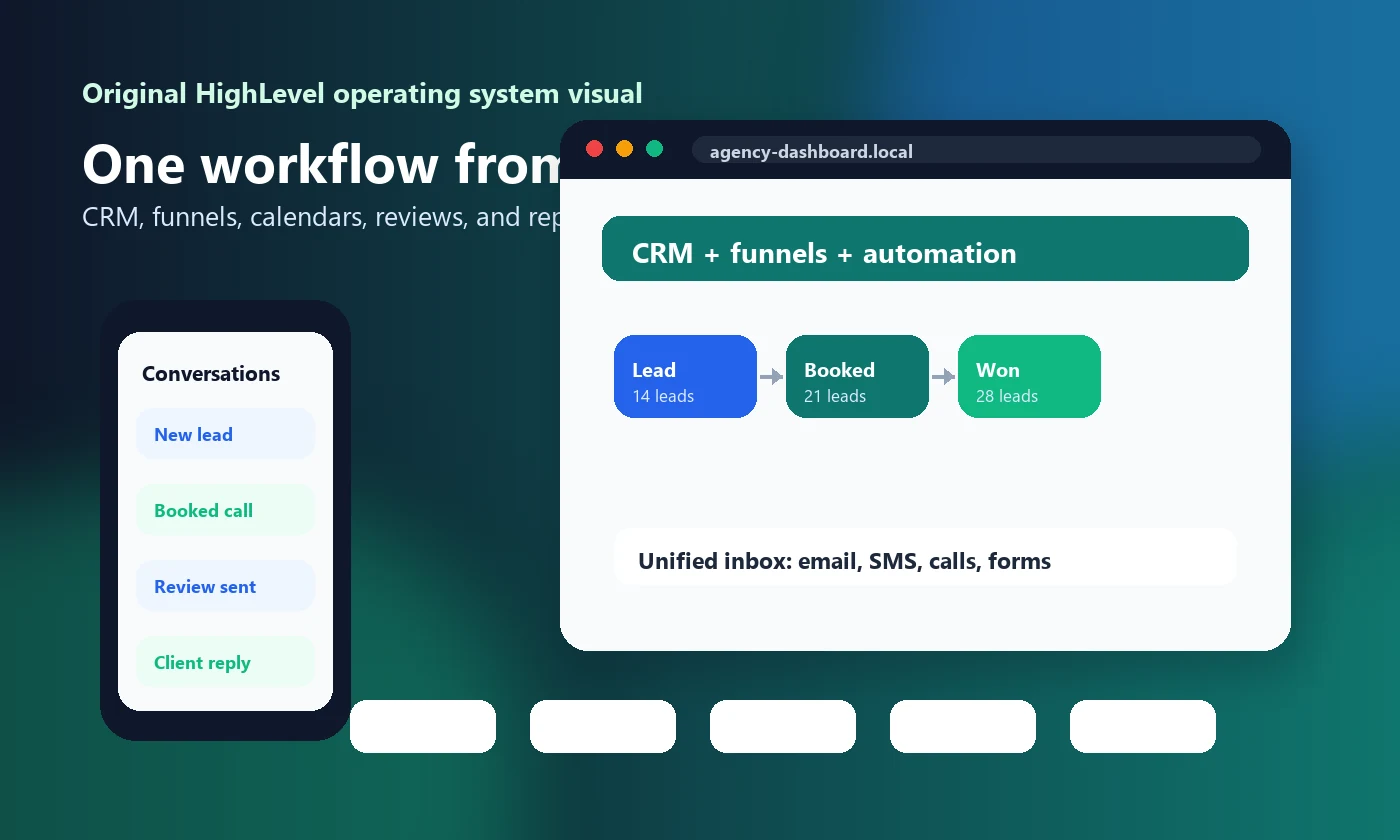
HighLevel, often searched as GoHighLevel, is one of the most discussed CRM and marketing automation platforms for agencies, consultants, coaches, and local service businesses. The appeal is easy to understand: one login for pipelines, conversations, funnels, calendars, forms, email, SMS, reputation management, automation, payments, reporting, and even white-label SaaS delivery. The harder question is whether that all-in-one promise is right for your business.
This review is written for practical buyers, not software collectors. We will look at what HighLevel does well, where it can become too much, how the current pricing structure works, how to evaluate the affiliate program responsibly, and the setup decisions that separate a useful operating system from another messy tool stack.
| Question | Short answer | What to check before buying |
|---|---|---|
| Best fit | Agencies, consultants, coaches, and service businesses that need CRM plus automation | Can your team maintain clean pipelines, calendars, automations, and client data? |
| Main strength | Combines many sales and marketing tools in one platform | Which current tools will it actually replace? |
| Main risk | Complex setup can reduce adoption if the process is unclear | Who owns implementation, testing, and training? |
| Pricing signal | Official plans currently start with a 14-day trial and tiers around Starter, Unlimited, and Agency Pro | Usage-based costs for SMS, email, AI, phone, and add-ons |
Try HighLevel with the official affiliate link
If your business already sells services, books appointments, follows up with leads, or manages clients across multiple tools, HighLevel is worth testing with a real workflow. Do not judge it from the feature list alone. Build one pipeline, one booking flow, one follow-up automation, and one reporting dashboard during the trial.
Visit the HighLevel affiliate page
Tip: replace this official link with your personal HighLevel referral URL if you already have one.
HighLevel vs GoHighLevel: are they the same?
Yes, in everyday search language, HighLevel and GoHighLevel usually refer to the same platform. The official brand is HighLevel, while GoHighLevel remains common because the domain, community language, and older reviews use that phrase. For SEO, it is smart to mention both terms naturally, but the article should not stuff them into every paragraph. Google does not need forced repetition. Readers need clarity.
HighLevel positions itself as an all-in-one sales and marketing platform. According to the official pricing page, core features include CRM and pipelines, website and funnel builder, workflow automation, unified conversations, email and SMS marketing, booking calendars, forms, surveys, online reputation management, dashboards, payments, courses, communities, API access, and AI features. That is a broad toolkit, and the breadth is both the reason people buy it and the reason some teams struggle with it.
The right way to evaluate HighLevel is not "does it have many features?" It does. The better question is "which business process will become simpler, faster, more measurable, or more profitable because these features are together?" If you cannot answer that, the platform may feel impressive but underused.
Who HighLevel is best for
HighLevel is strongest when a business needs to connect marketing, sales, follow-up, and client communication. A local marketing agency, for example, might run landing pages, contact forms, appointment calendars, email nurture, SMS reminders, review requests, and reporting for several clients. Using separate tools for each part can create duplicate data, missed handoffs, and hard-to-explain client reporting. HighLevel reduces that fragmentation.
Consultants and coaches can also benefit when their offer depends on booked calls, pipeline visibility, content funnels, and structured follow-up. A coach selling a high-ticket program may need a funnel, calendar, SMS reminder, pipeline stage, onboarding sequence, payment link, and testimonial request. In a scattered stack, each step needs a separate integration. In HighLevel, the same contact record can move through the whole journey.
Local service businesses are another strong use case, especially when leads arrive by phone, web form, referral, paid ads, chat, Google Business Profile, or social media. The missed-call text-back style of workflow, booking reminders, reputation requests, and pipeline tracking can be valuable for businesses where one missed lead is expensive.
Who should be careful before switching
HighLevel is not automatically the best choice for every small business. If you only need a simple contact database, a lightweight CRM may be easier. If you only need email newsletters, a dedicated email platform may feel cleaner. If your company has complex enterprise reporting, strict procurement rules, or a highly customized sales process, you may need deeper evaluation before consolidating everything.
The common mistake is buying HighLevel because it can replace many tools, then failing to define how the replacement will work. A platform can include a CRM, funnels, calendars, SMS, email, payments, memberships, and reputation tools, but the business still needs rules. Who updates the pipeline? Which leads get SMS? What happens when someone replies? How are opt-ins handled? Who monitors failed automations? What does a "qualified lead" mean?
If those questions are ignored, HighLevel can become a busy dashboard that hides operational confusion. If those questions are answered, it can become a practical operating system.
Core features that matter most
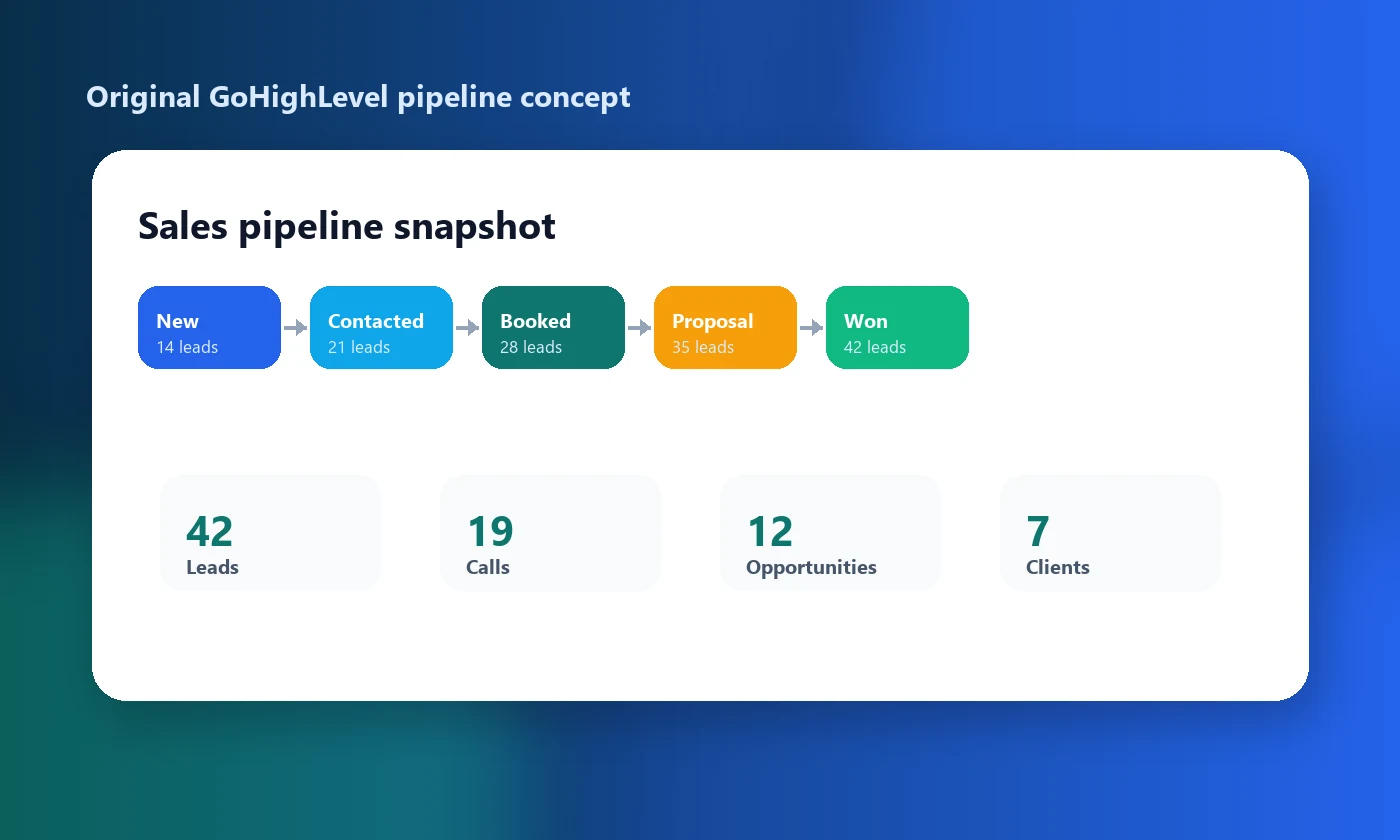
The CRM and pipeline tools are the foundation. Without clean contact records and clear stages, automation becomes unreliable. A good HighLevel setup starts with simple pipeline stages: new lead, contacted, booked, showed, proposal sent, won, lost, onboarding, and renewal where relevant. The stages should reflect real decisions, not vague hope.
The conversations inbox is another important feature because it brings messages into one place. For businesses that deal with email, SMS, calls, forms, and chat, unified conversations can reduce the "who replied to this customer?" problem. This is especially useful for agencies and service teams where multiple people may touch the same lead.
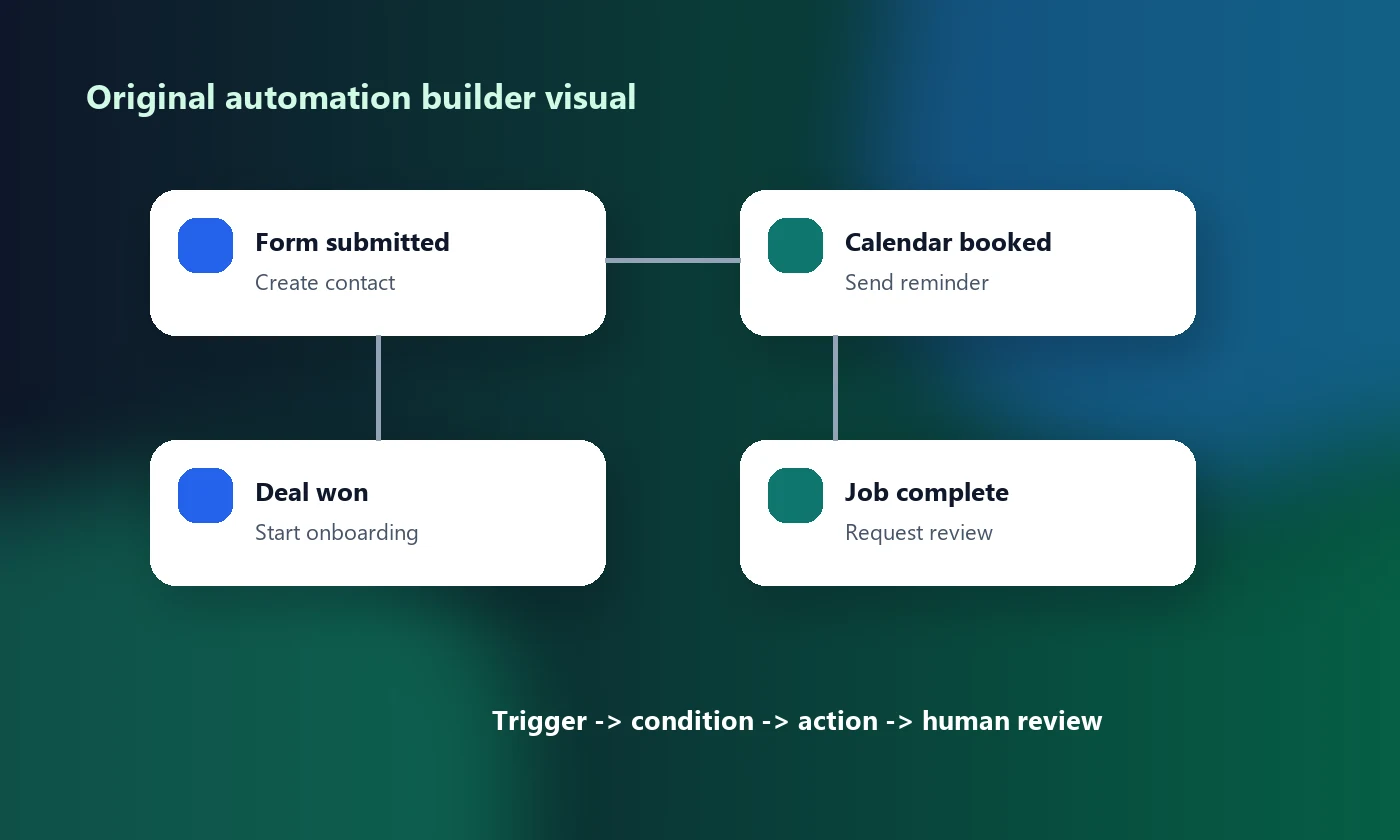
Workflow automation is where HighLevel becomes powerful. You can route leads, send reminders, create tasks, move opportunities, trigger nurture sequences, request reviews, alert team members, and connect forms to pipelines. But automation should begin with internal reliability before customer-facing complexity. A simple task reminder that prevents a missed callback may produce more value than a complicated 25-step nurture sequence nobody audits.
The website and funnel builder can replace separate landing page tools for many offers. It is useful for lead magnets, booking pages, paid-ad funnels, local service pages, webinar registration, and client campaign pages. The key is speed and integration. A form submission can immediately create a contact, start a workflow, update a pipeline, and notify the right person.
Pricing: what the official plans mean in practice
HighLevel's official pricing page currently promotes a free 14-day trial and lists plan levels that include Starter at $97 per month, Unlimited at $297 per month, Agency Pro at $497 per month, plus an Enterprise option that requires speaking with the team. The details can change, so always check the official pricing page before buying or publishing pricing claims.
The practical difference is usually about scale and business model. Starter is positioned for smaller businesses and solo marketers, with a limited number of sub-accounts. Unlimited is built for growing agencies that need unlimited sub-accounts. Agency Pro is aimed at agencies that want SaaS mode, automated sub-account creation, rebilling options, and more advanced API access.
Do not evaluate the price in isolation. Compare it against the tools it can realistically replace: CRM, funnel builder, calendar booking, SMS platform, email marketing, review management, forms, surveys, call tools, reporting, course hosting, community features, and client-facing portals. If HighLevel replaces six paid tools and reduces manual work, the math may be attractive. If you only use one or two features, it may be more expensive than a focused alternative.
The real value: fewer handoffs and better follow-up
The best reason to use HighLevel is not that it has a long feature list. The best reason is that it can reduce handoffs. When a lead fills a form, books a call, receives reminders, enters a pipeline, gets a follow-up sequence, and triggers a review request after purchase, the business can see the customer journey instead of guessing across disconnected tools.
That visibility changes management. You can see which lead sources produce booked calls, which appointment reminders reduce no-shows, which stages slow down, which reps need support, which campaigns convert, and which clients are actually receiving the work promised. For agencies, this can make reporting more concrete. Clients do not only want activity. They want proof that marketing turns into conversations, appointments, sales, reviews, and retention.
For small businesses, the value is often emotional as well as financial. Fewer missed messages. Less searching through inboxes. Less dependence on memory. More consistent follow-up. Those benefits are hard to capture in a feature checklist, but they are often why a tool becomes sticky.
Where HighLevel can frustrate users
The first frustration is the learning curve. HighLevel combines many categories of software, so the interface can feel dense at the beginning. A user who expects a simple CRM may be surprised by the number of settings, modules, automations, phone/email configuration steps, permissions, templates, and client-account options.
The second frustration is setup quality. HighLevel can do a lot, but it does not magically design your sales process. Poor naming conventions, unclear pipeline stages, duplicate automations, weak opt-in practices, and messy templates will create messy outcomes. The platform gives you leverage, but leverage can amplify confusion too.
The third frustration is cost clarity. The subscription price is only one part of the cost. Usage-based charges can apply to telecommunications, AI services, email, phone numbers, and certain add-ons. This is normal in the industry, but it still needs planning. Agencies should be especially careful when deciding whether to absorb those costs, pass them through, or rebill with markup where allowed.
The fourth frustration is that "all-in-one" does not always mean "best-in-class for every feature." A specialist email platform, analytics platform, or enterprise CRM may outperform HighLevel in a narrow use case. The trade-off is integration and operational simplicity versus specialist depth.
HighLevel for agencies: why SaaS mode matters
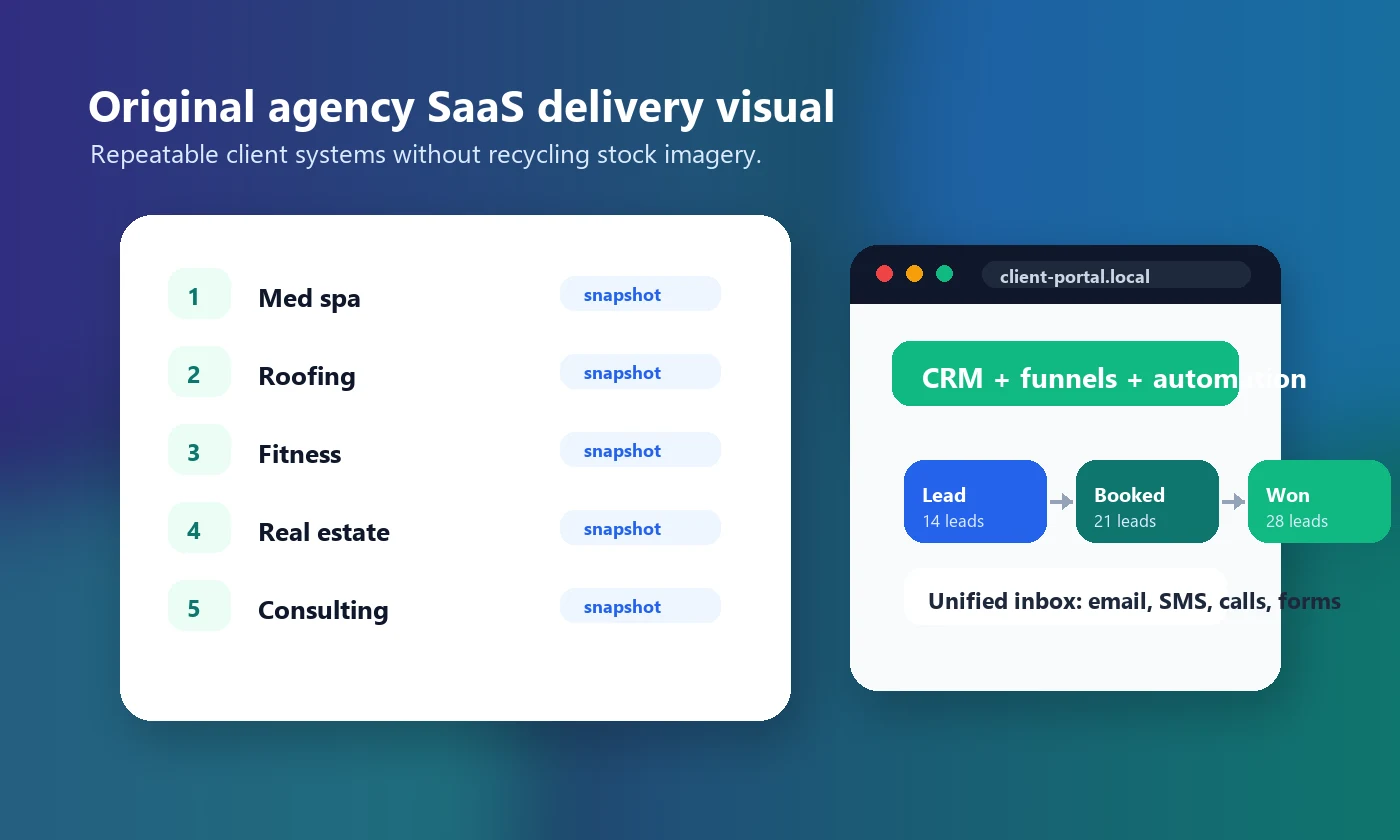
HighLevel is especially popular with agencies because it can become more than an internal CRM. With the right plan and setup, agencies can create client sub-accounts, build snapshots, deliver repeatable systems, and in some cases resell software access under their own brand. This is why the platform is often discussed by "SaaSPRENEUR" and white-label agency communities.
SaaS mode can be powerful because it changes the agency business model. Instead of only selling done-for-you services, an agency can package a client portal, CRM, funnels, booking, automation, and reporting into a recurring software offer. That said, SaaS mode is not passive income by default. Clients still need onboarding, support, templates, documentation, training, and clear boundaries.
A strong agency offer might include a local lead capture funnel, missed-call text-back, appointment reminders, review requests, monthly reporting, and a simple pipeline. A weak agency offer simply resells login access and hopes the client figures it out. The first creates value. The second creates churn.
HighLevel affiliate program: what to know before promoting it
The official HighLevel affiliate program advertises 40% recurring commissions for active referred accounts, and the support documentation describes the affiliate portal as the place to access referral links, reporting, referrals, payout settings, and resources. The same support documentation also says affiliates use Tipalti for payout setup and that payments are approved and sent around the 15th of each month for commissions earned in the previous month, subject to the program rules.
That can be attractive for creators, agencies, educators, and consultants with an audience that genuinely needs CRM and marketing automation. But affiliate income should be approached responsibly. The best affiliates do not just say "buy this tool." They teach use cases, compare trade-offs, show setup examples, disclose the relationship, and help buyers understand whether HighLevel fits their stage.
If you promote HighLevel, stay away from exaggerated earnings claims. HighLevel itself includes a disclaimer that results vary. Your content should do the same. Talk about practical workflows, pricing, setup time, limitations, and buyer fit. That builds trust, and trust converts better over time than hype.
Best place to put the affiliate link
The strongest placement is after the reader understands who HighLevel is for, what it costs, and what to test during the trial. That is why this article places the main affiliate CTA after the summary and again here, after the pricing and use-case sections.
Start with the official HighLevel affiliate page
For SEO and compliance, affiliate links should be useful, disclosed, and marked with rel="sponsored".
Setup checklist for a useful HighLevel trial
A real trial should test a real business process. Do not spend two weeks clicking through features randomly. Choose one revenue workflow and build it end to end. For example: website form to pipeline, pipeline to booking, booking to SMS reminder, no-show follow-up, won deal to onboarding, completed service to review request, and dashboard to weekly review.
- Define one ideal customer journey before touching the software.
- Create pipeline stages that match actual sales decisions.
- Import only clean contacts needed for the test.
- Connect one form or landing page to the pipeline.
- Build one simple workflow for lead notification and follow-up.
- Set calendar availability, reminders, and no-show handling.
- Create a basic dashboard for leads, bookings, opportunities, and closed deals.
- Test every automation with internal addresses before using it with customers.
- Write a one-page operating rule for the team.
- Review the workflow after seven days and remove anything unnecessary.
This checklist reveals the truth faster than a long feature tour. If the platform makes this workflow smoother, the trial is useful. If the team resists using it, simplify the setup before blaming the software.
HighLevel vs HubSpot, ClickFunnels, ActiveCampaign, and other tools
HighLevel competes with several categories at once, which makes comparisons tricky. Against HubSpot, HighLevel may appeal to agencies that want built-in funnels, SMS, calendars, sub-accounts, white-label options, and a lower-cost agency operating model. HubSpot may appeal to teams that want a mature CRM ecosystem, deep sales operations, enterprise reporting, and broad third-party adoption.
Against ClickFunnels, HighLevel is less about a single funnel builder and more about the whole customer journey after the opt-in: CRM, conversations, calendars, automations, reviews, and client accounts. ClickFunnels may still be attractive for users who mainly want funnel creation and conversion pages.
Against ActiveCampaign, HighLevel brings broader agency operations, SMS, calendars, funnels, pipelines, and reputation tools. ActiveCampaign may appeal to teams that prioritize email marketing depth, segmentation, and campaign sophistication. The right choice depends on whether your bottleneck is email performance or operational consolidation.
Against a lightweight CRM like Pipedrive or a free CRM, HighLevel is more expensive and more complex, but it can replace more tools. If your business only needs pipeline visibility, choose the simpler CRM. If you need pipeline plus booking plus SMS plus funnels plus reviews plus client delivery, HighLevel becomes more compelling.
How to use HighLevel for local business growth
A local service business can use HighLevel to make lead handling more consistent. Imagine a dental clinic, med spa, roofing company, cleaning company, gym, or real estate team. Leads come from ads, forms, calls, referrals, and local search. The cost of a missed response can be high. A HighLevel workflow can create a contact, send an immediate confirmation, notify the team, assign an owner, offer booking, send reminders, and follow up when the lead does not respond.
For local SEO, the reputation management side can matter too. Review requests after completed jobs, response templates, and customer feedback workflows can help the business build trust. Reviews are not just a search signal. They are a conversion signal. A business with strong reviews often converts more traffic into calls and booked appointments.
HighLevel can also support nurture sequences for leads who are not ready to buy. A homeowner requesting a roof estimate, a patient considering a cosmetic treatment, or a business owner comparing marketing services may need education before booking. A short, helpful follow-up sequence can keep the brand visible without relying on manual memory.
How to measure ROI from HighLevel
The return on HighLevel should be measured through operational outcomes, not just subscription math. Track response time, missed calls recovered, booked appointments, show rate, lead-to-opportunity conversion, opportunity-to-sale conversion, review volume, client retention, and hours saved from manual admin.
Agencies should track client-facing value as well. How many leads did a campaign generate? How many booked? How many showed? How many converted? Which sources produced customers, not just clicks? HighLevel's value grows when it helps the agency explain performance in the language clients care about.
Small businesses should use a simple ROI model. If HighLevel costs $297 per month plus usage, how many extra appointments or recovered leads does it need to justify itself? For some businesses, one saved customer or one booked job may cover the subscription. For others, the math may require more volume.
You can use the free ROI calculator to estimate how many additional sales, saved hours, or retained customers would make the platform worthwhile.
Common mistakes that hurt HighLevel results
The first mistake is over-automating too early. New users often build complex workflows before they understand the customer journey. Start small. Automate lead alerts, reminders, simple nurture, review requests, and task creation. Add complexity only after the basic flow works.
The second mistake is weak data hygiene. Duplicate contacts, unclear source tracking, inconsistent pipeline stages, and missing owners will make reporting unreliable. If the data is bad, the dashboard will not save you.
The third mistake is ignoring compliance and consent. SMS, email, calls, and review requests all require careful handling. Businesses should understand opt-in rules, unsubscribe handling, local regulations, and platform policies. Trust is part of the system.
The fourth mistake is treating snapshots as magic. Templates can save time, but they still need customization. A med spa, law firm, gym, and roofing company should not all receive the same language, pipeline, and follow-up logic.
The fifth mistake is failing to train the team. A tool only becomes useful when people know what to do on a busy day. Write rules, record short training videos, review examples, and audit usage weekly during the first month.
My practical verdict
Use HighLevel if...
- You run an agency or service business with multiple lead sources.
- You need CRM, funnels, calendars, messaging, and automation together.
- You can invest time in setup, testing, and team rules.
- You want to package repeatable client systems or explore SaaS mode.
Skip or wait if...
- You only need a simple CRM or newsletter tool.
- No one owns implementation or data hygiene.
- Your team will not use pipeline stages and tasks consistently.
- You cannot estimate usage costs or expected ROI.
HighLevel is a serious platform for the right buyer. It can simplify a scattered marketing stack, improve follow-up, create better client reporting, and support agency SaaS offers. But it is not a shortcut around business process. The businesses that win with HighLevel usually know their customer journey, keep the setup clean, and treat automation as a way to support real human service.
If you are curious, test it with one specific workflow. Build it, measure it, and decide from evidence. That is a better buying process than chasing hype or dismissing the platform because it looks complex.
FAQ: HighLevel / GoHighLevel
Is HighLevel the same as GoHighLevel?
Yes. HighLevel is the official product and company name, while GoHighLevel is still widely used in search because of the domain and older community language.
Is HighLevel good for small businesses?
It can be very useful for small businesses that need lead capture, booking, follow-up, reviews, and pipeline tracking. If a business only needs basic contact storage, a simpler CRM may be enough.
How much does HighLevel cost?
The official pricing page currently lists Starter, Unlimited, Agency Pro, and Enterprise options, with a 14-day free trial. Always check the official pricing page because plan details and add-ons can change.
Does HighLevel have an affiliate program?
Yes. The official affiliate program advertises recurring commissions for active referred accounts and provides a portal for links, reports, referrals, and payout settings.
What should I build first in HighLevel?
Build one complete revenue workflow first: lead form, pipeline stage, owner notification, booking calendar, reminder, follow-up, and dashboard. That shows whether the platform solves a real operational problem.
Recommended next step
Pick one workflow you want to improve: lead capture, appointment booking, missed-call recovery, review requests, agency reporting, or client onboarding. Then test HighLevel against that workflow instead of browsing every feature.
Continue with how to choose a CRM, business automation, digital marketing strategy, or how to build a sales funnel.

Written and reviewed by
Rachel Torres
Rachel Torres is the BusinessFocusHub editorial author for practical guides on business finance, marketing, productivity, operations, and online tools. Her articles focus on clear steps, realistic trade-offs, and reader-first advice for entrepreneurs and small business owners.